
Church of the Holy Sepulchre – The Heart of Christian Pilgrimage
Christianity’s holiest shrine — site of crucifixion and resurrection
Overview
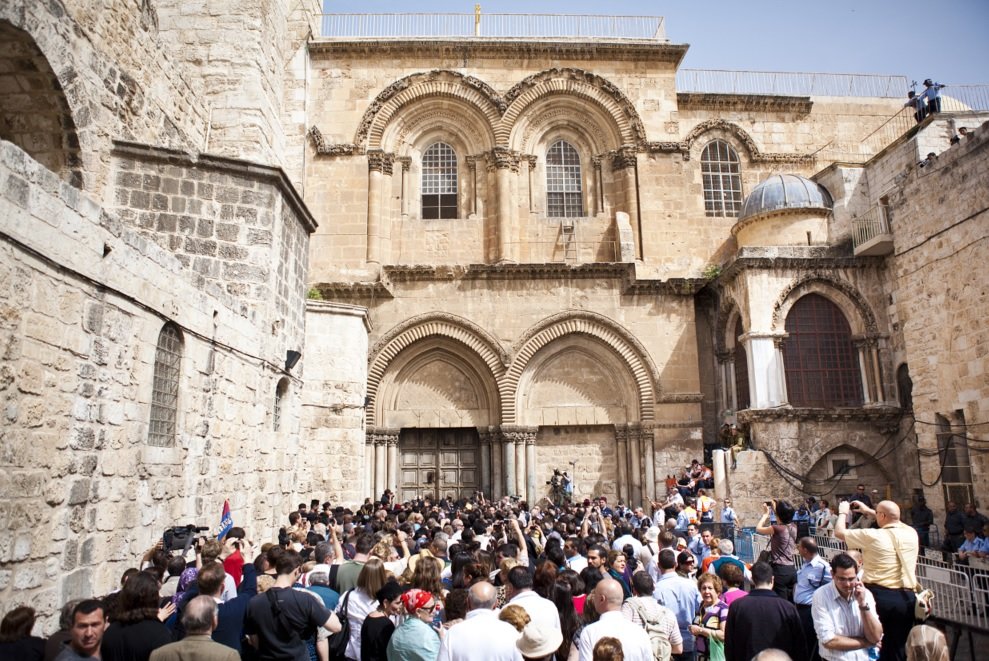
The Church of the Holy Sepulchre, situated in the heart of Jerusalem’s Christian Quarter, is one of the most revered landmarks in the world. For centuries, it has been the focal point of Christian pilgrimage, believed to encompass both Golgotha (Calvary), the hill where Jesus was crucified, and the tomb of the resurrection, where He rose from the dead. Few places on earth carry such profound spiritual weight, drawing pilgrims and visitors from every corner of the globe.
Originally constructed in the 4th century by Emperor Constantine at the request of his mother, St. Helena, the church has endured destruction, rebuilding, and renovation through Byzantine, Crusader, and Ottoman eras. Its architecture is a layered chronicle of history, where ancient mosaics, medieval chapels, and Crusader-era stonework coexist under one roof.
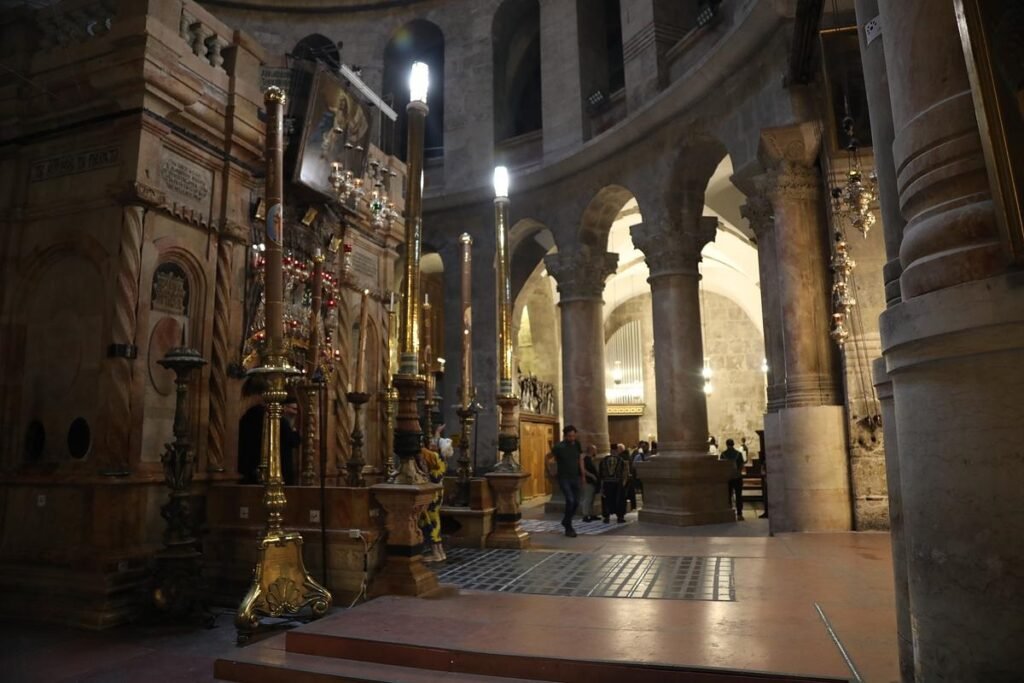
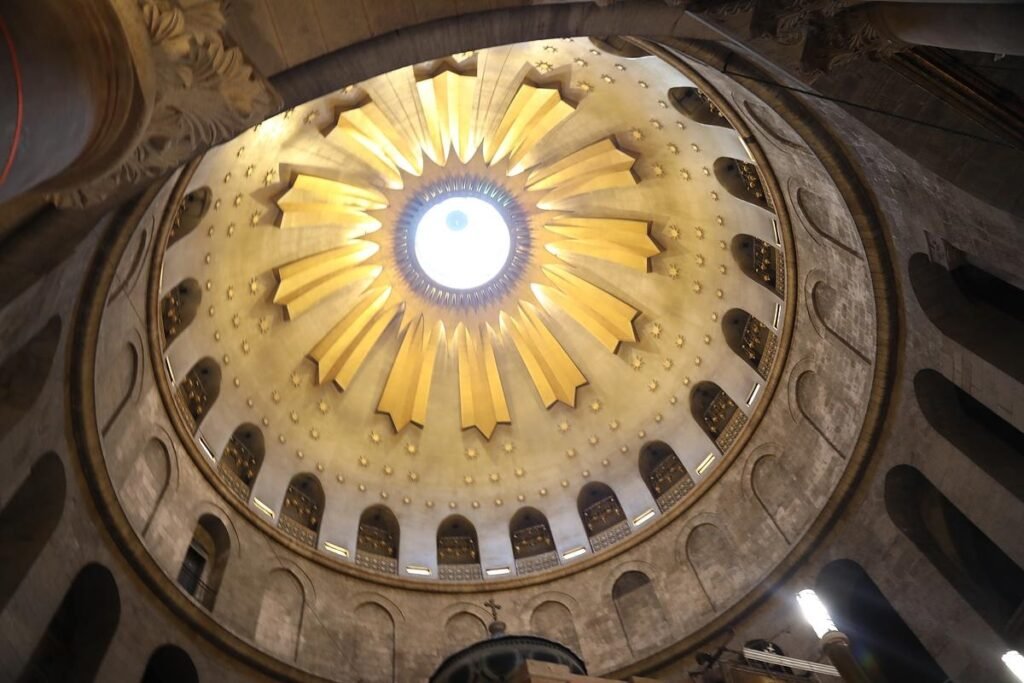
Inside, the atmosphere is one of awe and devotion. The flicker of candles, the scent of incense, and the prayers of pilgrims create a living reminder that this is not a relic of the past, but an active, sacred sanctuary. The church also embodies the diversity of global Christianity: multiple
denominations, including Greek Orthodox, Roman Catholic, and Armenian Apostolic communities, share custodianship of the site under the long-standing “Status Quo” arrangement.
For travelers, the Holy Sepulchre offers not only a chance to connect with the central mysteries of the Christian faith but also an unparalleled window into Jerusalem’s history as a crossroads of empires, cultures, and religions. Visiting this church is a profound spiritual and cultural experience — a reminder of how Jerusalem’s stones continue to shape faith and memory across centuries.
Spiritual & Historical Significance
For Christians worldwide, the Holy Sepulchre represents the very heart of their faith. The site is shared by several Christian denominations, including the Greek Orthodox, Roman Catholic, and Armenian Apostolic churches, who together maintain the church under the “Status Quo” arrangement established in the 19th century. Its walls bear witness to centuries of history — Crusader chapels, Byzantine mosaics, and centuries-old graffiti left by pilgrims.
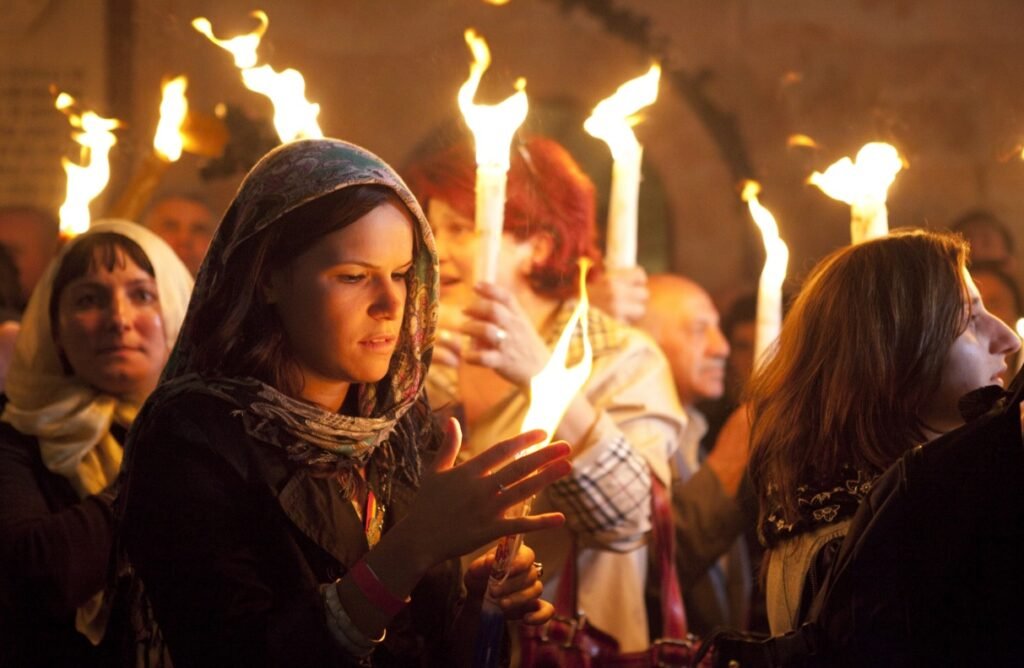
The church is not only a place of worship but also a living symbol of Christianity’s diversity. Pilgrims gather daily for processions, prayers, and liturgies, and on Holy Saturday, the annual ceremony of the Holy Fire draws thousands of worshippers in one of the most moving rituals of the Christian calendar.
Highlights & Experiences
Bow before the Stone of Anointing, where Jesus’ body is believed to have been prepared for burial.
Ascend to Calvary (Golgotha) and see the site traditionally associated with the crucifixion.
Enter the Aedicule, a small shrine enclosing the tomb of Christ, restored most recently in 2016.
Explore the chapels of different denominations, each adding layers of art, icons, and devotion.
Witness or join in the daily processions led by the Franciscan friars.
Visitor Information
- Location: Christian Quarter, Old City, Jerusalem
- Opening Hours: April–Sept 5:00 am–9:00 pm; Oct–March 4:00 am–7:00 pm
- Tel: +972 2-627-3314
- Admission: Free
- Suggested Tour Integration: Ideal to combine with the Via Dolorosa walk and visits to nearby Christian Quarter markets.
