Mosaics in Palestine – Stones of Faith and History
From ancient churches to modern workshops, mosaics in Palestine reflect centuries of devotion, artistry, and cultural pride.
Mosaic art has deep roots in Palestine, where churches, monasteries, and historic homes have been adorned with intricate stone and glass designs for over 1,500 years. From Byzantine floor mosaics in Jericho to the world-renowned mosaics of Madaba and the Bethlehem region, the craft reflects both spiritual devotion and artistic mastery.
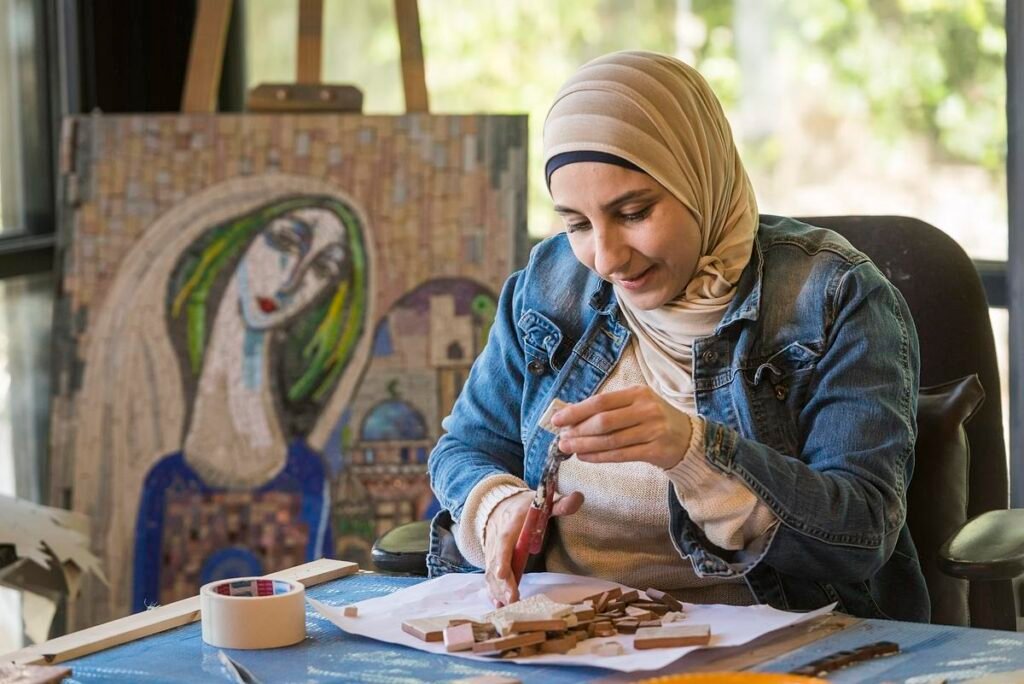
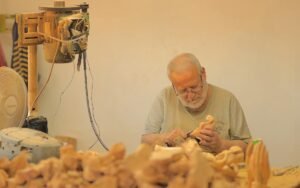
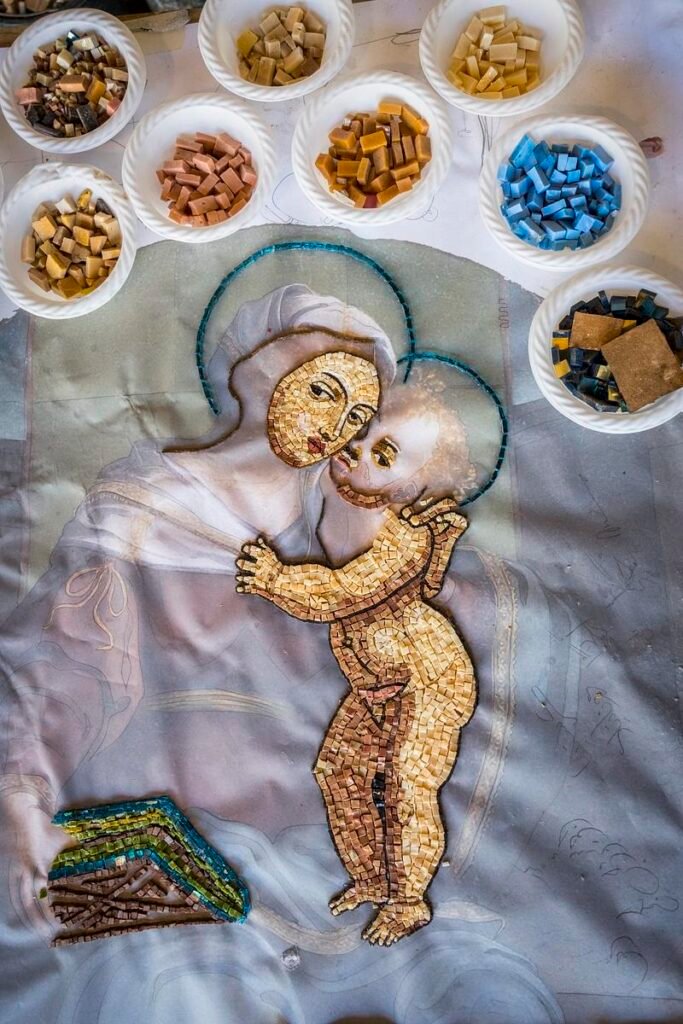
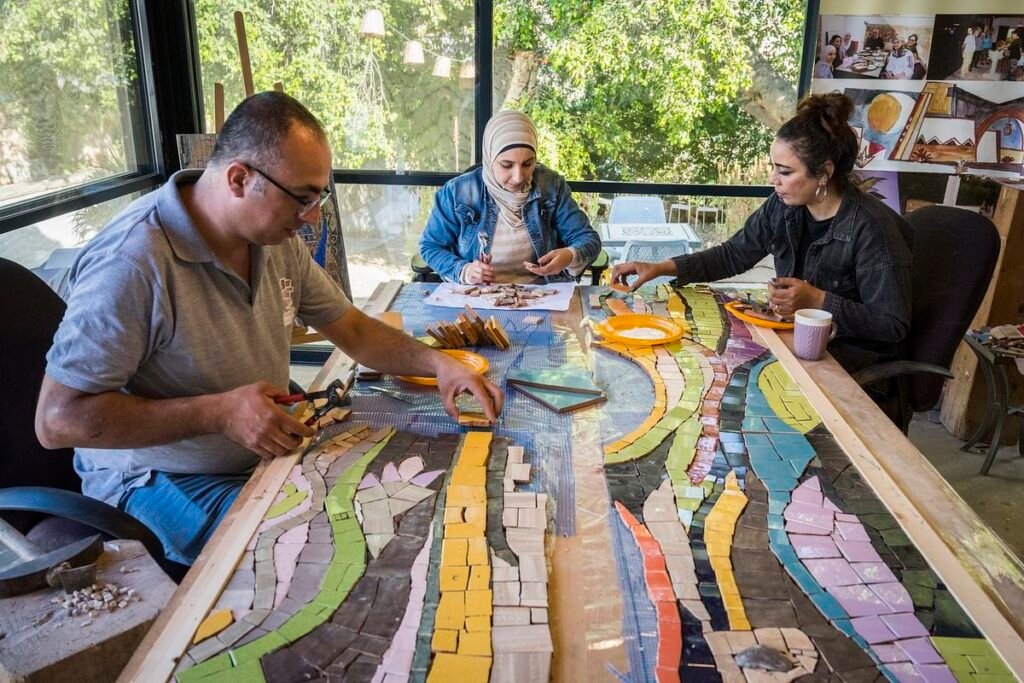
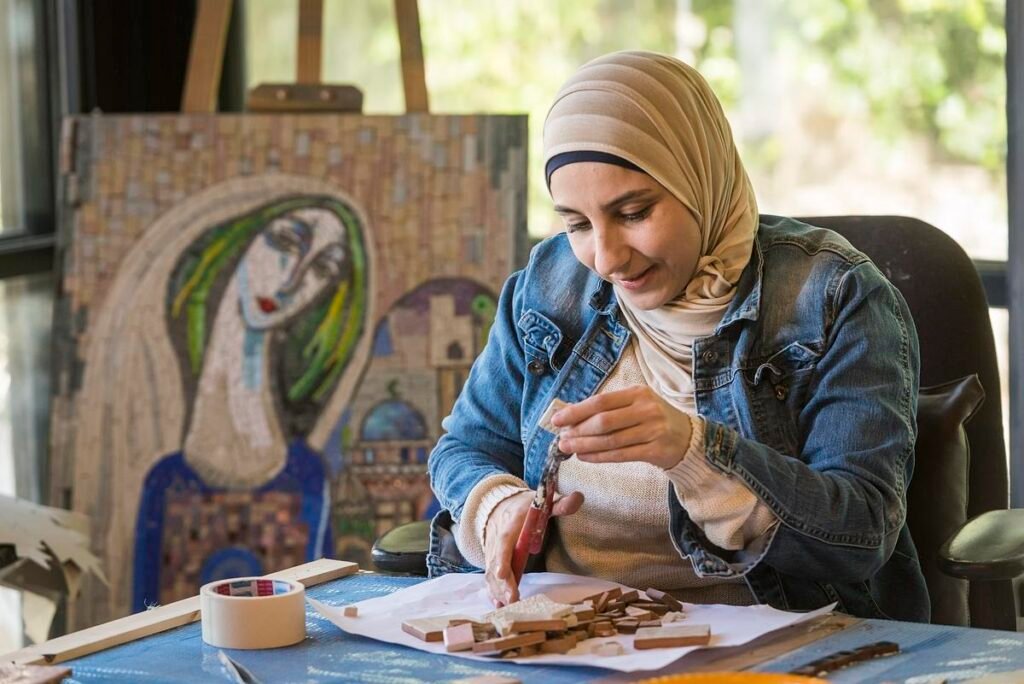
Today, artisans continue to create mosaics in workshops, carefully arranging tiny tesserae into crosses, doves, olive trees, and geometric patterns. Modern mosaic work blends traditional motifs with contemporary styles, allowing visitors to take home pieces that connect directly to Palestine’s long artistic heritage.
Highlights & Experiences
See Historic Mosaics: Visit sites like Hisham’s Palace in Jericho, the Church of the Nativity in Bethlehem, and monasteries with preserved mosaic floors.
Workshops in Bethlehem & Jericho: Watch artisans create detailed pieces by hand.
Shop Unique Artworks: From small coasters and tables to large wall panels, mosaics make lasting souvenirs.
Learn the Symbolism: Olive branches, doves, and biblical motifs are common in Palestinian mosaic tradition.
Try It Yourself: Some workshops offer short courses where visitors can place tesserae to create their own keepsake.
Cultural and Spiritual Significance
Mosaics connect past and present in Palestine. They were once symbols of wealth and devotion, adorning palaces and churches; today, they remain a proud art form sustained by local workshops. The craft symbolizes resilience, as artisans continue to produce mosaics despite economic and political challenges.
More Arts and Crafts