The Cardo – Jerusalem’s Ancient Roman Street

Jerusalem’s ancient Roman street, blending history with modern shops and galleries.

Overview

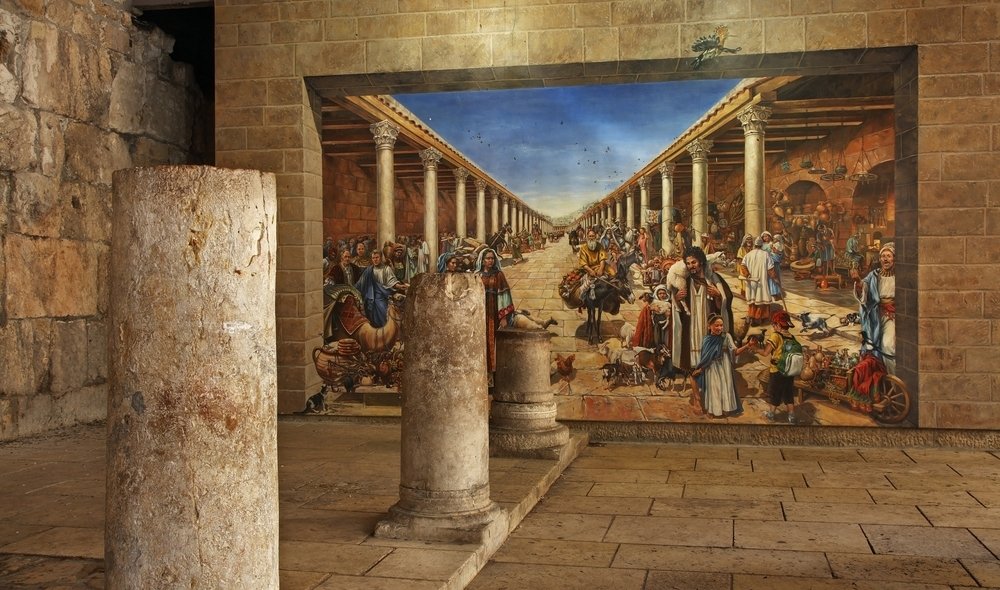
The Cardo was once the bustling main street of Roman and Byzantine Jerusalem, stretching from north to south through the heart of the Old City. Built in the 2nd century CE by Emperor Hadrian, it was later expanded under the Byzantine Emperor Justinian. The street was lined with columns, covered walkways, and shops, making it a central hub of commerce and social life.

Today, sections of the Cardo have been excavated and reconstructed in the Jewish Quarter, allowing visitors to walk where merchants and pilgrims once gathered. The modern Cardo blends ancient ruins with art galleries and craft shops, creating a unique connection between past and present.

Spiritual & Cultural Significance

The Cardo reflects the Roman tradition of planned cities, where a wide colonnaded street served as the civic and commercial backbone. In Jerusalem, it became a vital artery for centuries, connecting important gates and markets. Its preservation is a vivid reminder of the city’s urban continuity — a place where layers of Roman, Byzantine, Crusader, and modern life coexist.

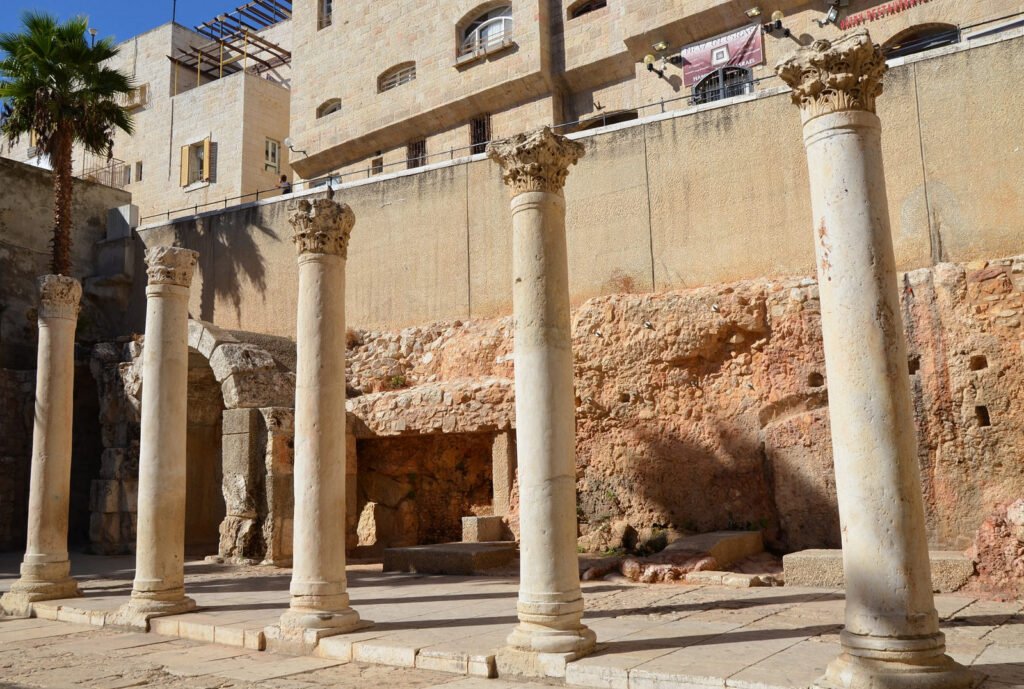
Today, mosaics, reconstructed columns, and ancient pavement stones let visitors imagine the street’s former grandeur. Meanwhile, contemporary shops and exhibitions keep the Cardo alive as both an archaeological site and a living marketplace.

Highlights & Experiences

Stroll along sections of the reconstructed colonnaded street in the Jewish Quarter.

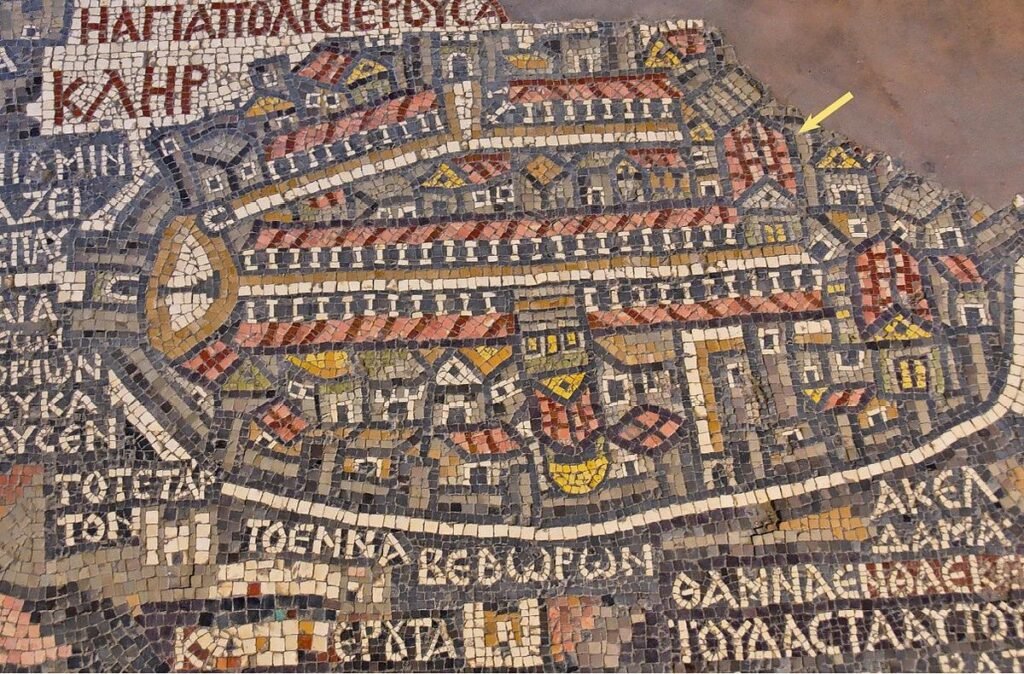
See the famous Madaba Map mosaic (replica), showing the Cardo as Jerusalem’s central street.

Explore galleries and shops selling Judaica, art, and local crafts within restored arches.

View archaeological remains from Roman, Byzantine, and Crusader periods.

Visitor Information

  • Location: Jewish Quarter, Old City of Jerusalem
  • Hours: Open daily during Jewish Quarter visiting hours (shops may vary)
  • Contact: N/A – open public site with shops
  • Entry: Free (some exhibits or galleries may charge small fees)
  • Note: Walking surface is uneven in excavated sections; comfortable shoes recommended.