
Gates of Jerusalem’s Old City –
Portals Through Time
Step through Jerusalem’s ancient gates, where every entrance tells a story of faith, history, and connection across the centuries
The walls of Jerusalem’s Old City are punctuated by eight historic gates, each with its own story, symbolism, and role in daily life. Built primarily in the 16th century by Sultan Suleiman the Magnificent, the gates were designed not only as defensive structures but also as symbolic thresholds between the sacred city within and the world beyond.
Over the centuries, the gate has greeted travelers ranging from Crusaders to Ottoman officials. Nearby stands the Tower of David (Citadel), a fortress that today houses a museum showcasing Jerusalem’s history. Bustling with shops, cafes, and tour groups, Jaffa Gate remains the most convenient and welcoming entry for visitors exploring the Old City.

Damascus Gate – (Bab al-Amud)
The Damascus Gate (Bab al-Amud) is the most impressive and lively of Jerusalem’s Old City gates. Built in its current form by Sultan Suleiman the Magnificent in 1537, it replaced earlier Roman and Crusader gates that once marked this northern approach. Its Arabic name, “Gate of the Column,” recalls a Roman victory column that once stood inside.
Today, Damascus Gate is a bustling hub, connecting the Old City’s Muslim Quarter to the modern streets of East Jerusalem. Markets spill out from its steps, alive with vendors selling produce, spices, and street food. For many, the gate is more than an entrance — it’s a daily meeting place, a cultural landmark, and a striking reminder of Jerusalem’s layered history.

New Gate (Bab al-Jadid)
The New Gate (Bab al-Jadid) is the youngest of Jerusalem’s Old City gates, opened in 1889 by the Ottoman Sultan Abdul Hamid II. Unlike the other historic gates built in the 16th century, this one was created to provide easier access between the Christian Quarter and the expanding neighborhoods outside the walls.
The New Gate quickly became a vital link for pilgrims, clergy, and residents moving between the Old City’s monasteries, churches, and the new city. Today, it remains a lively entrance filled with shops, cafes, and guesthouses. Though not as ancient as its counterparts, the New Gate represents Jerusalem’s evolving story, where tradition meets the modern era.
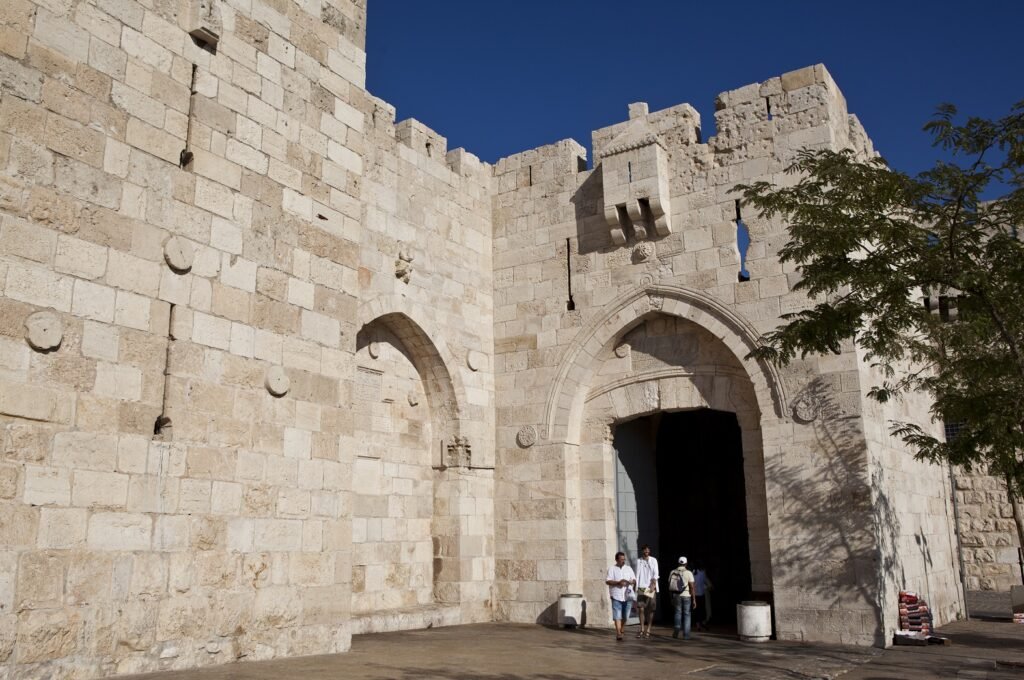
Jaffa Gate (Bab al-Khalil)
The Jaffa Gate (Bab al-Khalil) is one of the most popular entrances to Jerusalem’s Old City, opening onto the Christian and Armenian Quarters. Built in 1538 under Sultan Suleiman the Magnificent, it was named for the road leading west to the Mediterranean port of Jaffa, the historic landing point for pilgrims bound for the Holy City.
Over the centuries, the gate has greeted travelers ranging from Crusaders to Ottoman officials. Nearby stands the Tower of David (Citadel), a fortress that today houses a museum showcasing Jerusalem’s history. Bustling with shops, cafes, and tour groups, Jaffa Gate remains the most convenient and welcoming entry for visitors exploring the Old City.
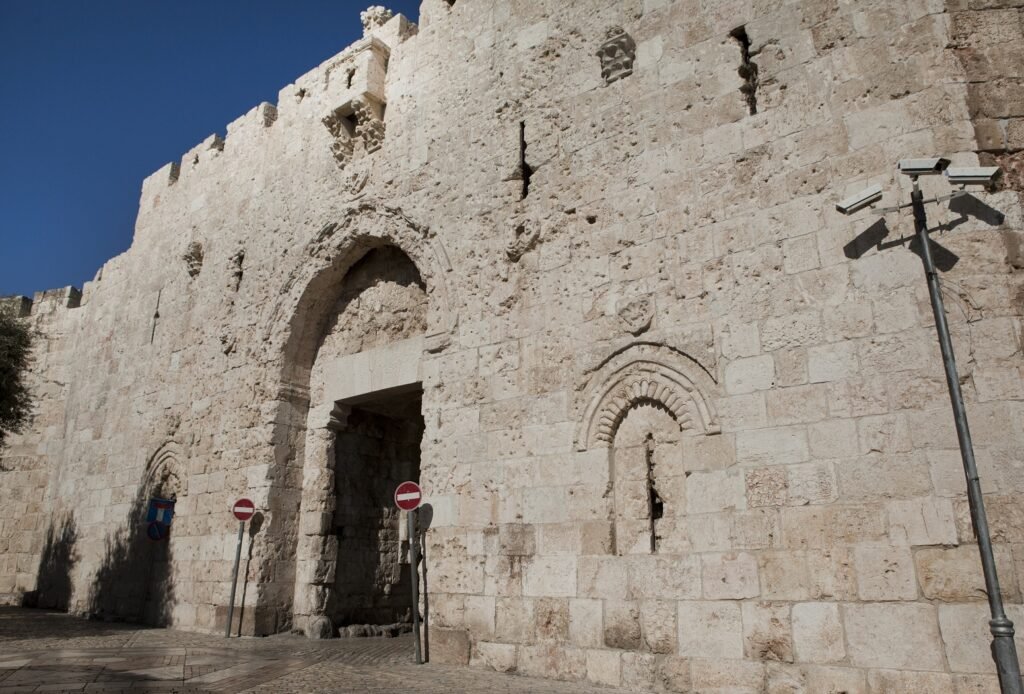
Zion Gate (Bab al-Nabi Dawud)
The Zion Gate (Bab al-Nabi Dawud), built by Sultan Suleiman the Magnificent in 1540, links the Old City to Mount Zion, where sacred sites include the Room of the Last Supper, King David’s Tomb, and several historic monasteries. Its walls still bear the heavy scars of fighting during the 1948 Arab–Israeli War, when the gate became a frontline between forces.
Opening into the Armenian and Jewish Quarters, Zion Gate stands as both a spiritual and historical threshold. Pilgrims pass through on their way to Mount Zion’s shrines, while visitors see in its bullet holes a powerful reminder of Jerusalem’s turbulent past and enduring resilience.
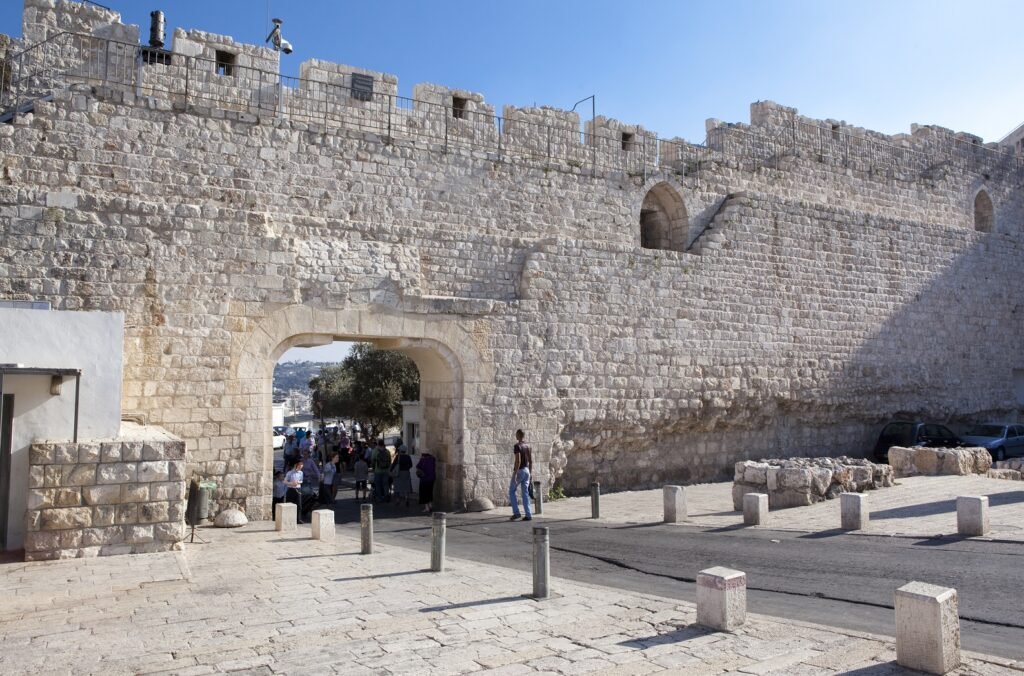
Dung Gate (Bab al-Maghariba)
The Dung Gate (Bab al-Maghariba) is the southern entrance to Jerusalem’s Old City, providing direct access to the Western Wall Plaza and the Jewish Quarter. Built in its present form by Sultan Suleiman in 1538, the gate has been expanded in modern times to allow vehicles and buses to bring worshippers and visitors to this sacred area.
The name “Dung Gate” dates back to ancient times, when refuse was carried out of the city here toward the nearby Kidron Valley. Despite its humble name, today it is one of the most important and heavily used gates, welcoming thousands of worshippers and tourists each day who come to pray, reflect, and experience the spiritual heart of Judaism.
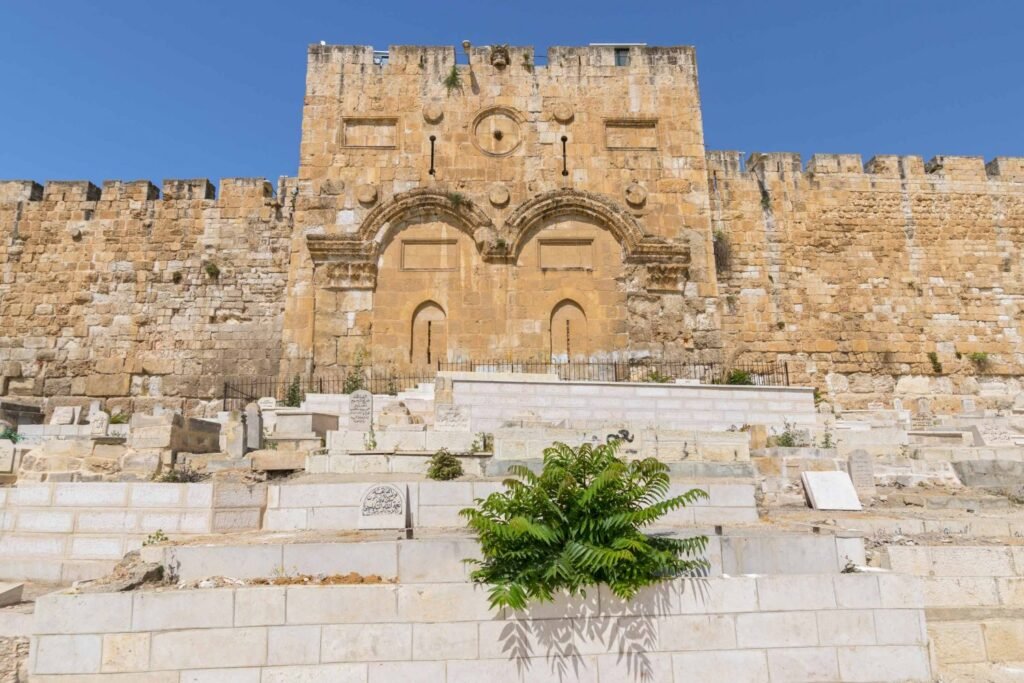
Golden Gate (Bab al-Rahma)
The Golden Gate (Bab al-Rahma) is one of the most striking features of Jerusalem’s eastern wall, facing the Mount of Olives. Unlike the other Old City gates, it has been sealed for centuries. Tradition holds that it was closed in the 16th century by Ottoman rulers to prevent the arrival of the Messiah, as Jewish belief associates the gate with the coming of the redeemer.
For Christians, the gate is tied to Jesus’ triumphal entry into Jerusalem on Palm Sunday. In Islamic tradition, it is linked to the Day of Judgment. Though inaccessible, the Golden Gate’s powerful symbolism makes it one of the most spiritually charged sites in the city.
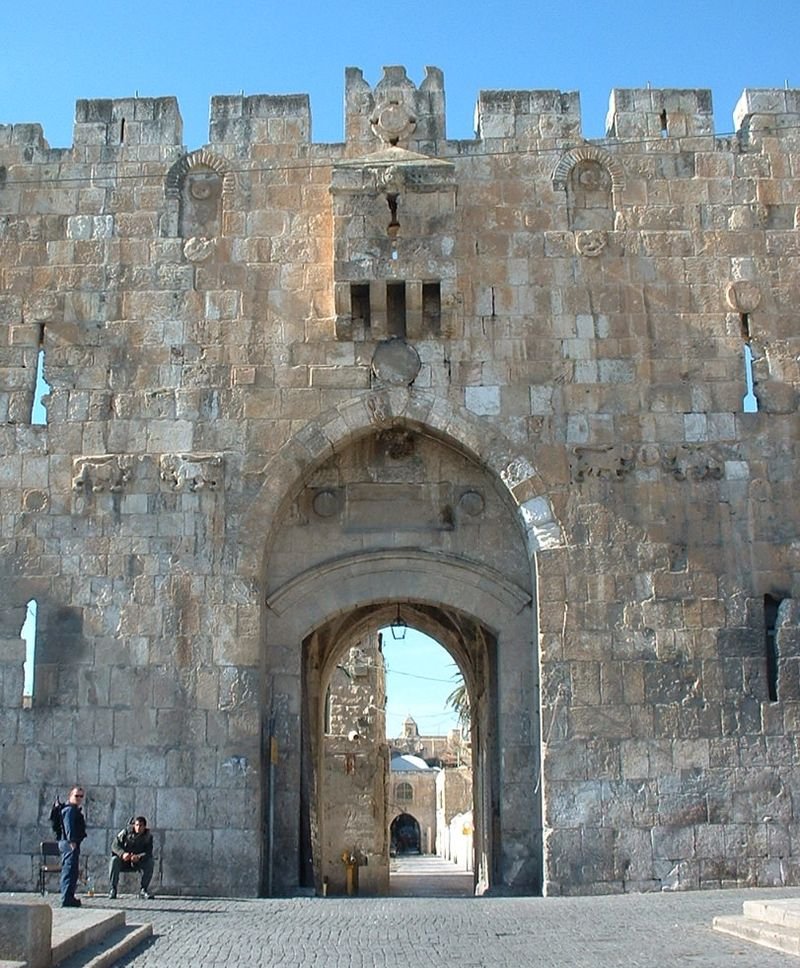
Lions’ Gate (Bab al-Asbat)
The Lions’ Gate (Bab al-Asbat), on the eastern wall of Jerusalem’s Old City, is named after the carved lion figures that flank its entrance. Built by Sultan Suleiman the Magnificent in 1538, the gate is also known as St. Stephen’s Gate, marking the traditional site of the martyrdom of St. Stephen, the first Christian martyr.
Today, the gate is best known as the starting point of the Via Dolorosa, the path pilgrims walk to retrace Jesus’ steps to the crucifixion. It also provides access to the Temple Mount/Haram al-Sharif and the Muslim Quarter. Both symbolic and functional, the Lions’ Gate bridges sacred traditions and living history in the heart of Jerusalem.
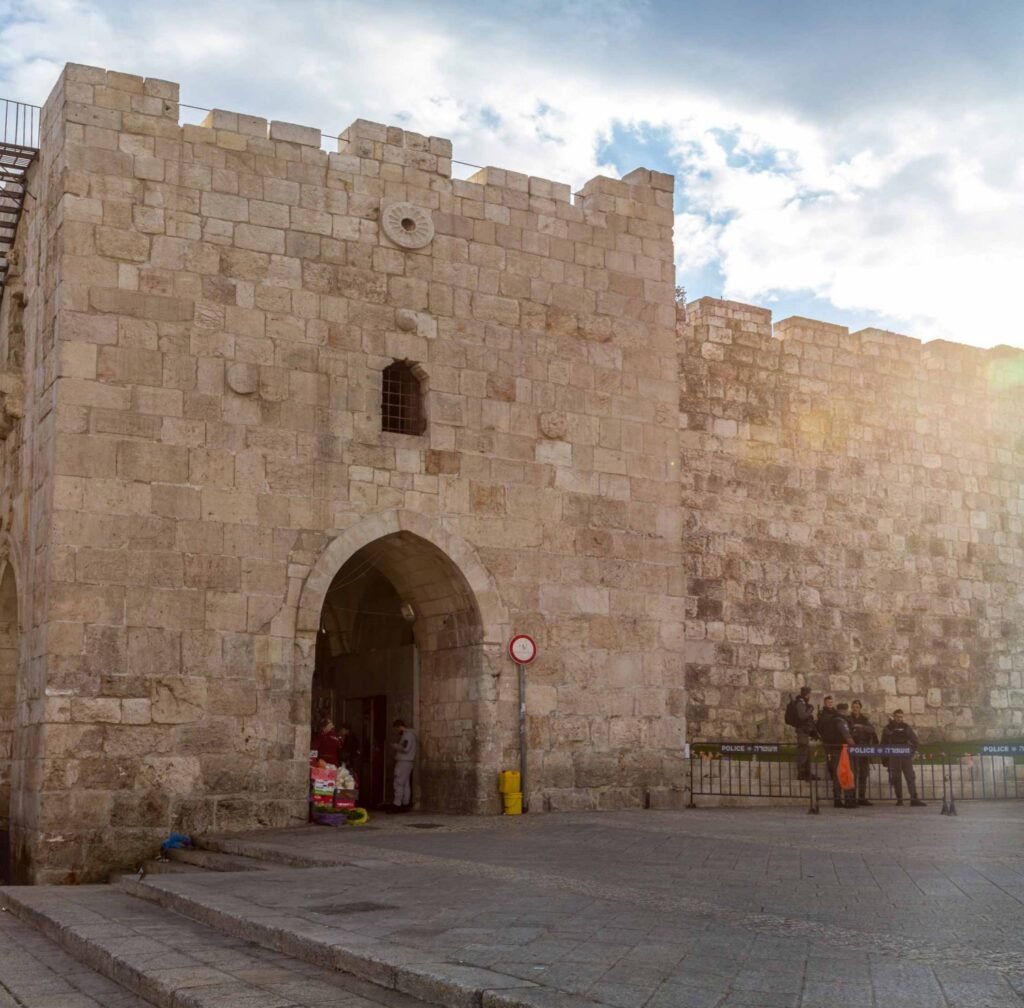
Herod’s Gate (Bab al-Zahra)
The Herod’s Gate (Bab al-Zahra) is a smaller, less ornate entrance on the northern wall of Jerusalem’s Old City, leading directly into the Muslim Quarter. Built during the Ottoman period in the 1530s, it takes its Western name from the belief that the nearby site was once associated with King Herod, though there is no historical link.
In Arabic, its name “Bab al-Zahra” refers to a nearby cemetery. Today, the gate primarily serves local residents, offering a quieter entry point compared to the busier Damascus Gate nearby. Though modest in size, Herod’s Gate reflects the layered history of Jerusalem, standing as a functional yet historically resonant passage into the heart of the Old City.
Search Sites and Attractions in Palestine
Search by type of attraction and location
