
Nature & Landscapes of Jericho
Discover Jericho’s unique landscapes, where desert canyons, fertile springs, and the Dead Sea create a striking blend of nature and history.
Jericho’s landscapes reveal the remarkable contrasts of Palestine’s geography. Here, desert canyons meet fertile springs, palm groves thrive beside barren cliffs, and the Jordan Valley stretches to the horizon. From the healing waters of the Dead Sea to the rugged trails of Wadi Qelt, nature in Jericho is not just scenery — it is a living force that has sustained communities for thousands of years. Exploring these sites means discovering both the beauty of the land and the resilience of its people, who have long drawn life, faith, and inspiration from this oasis in the desert.
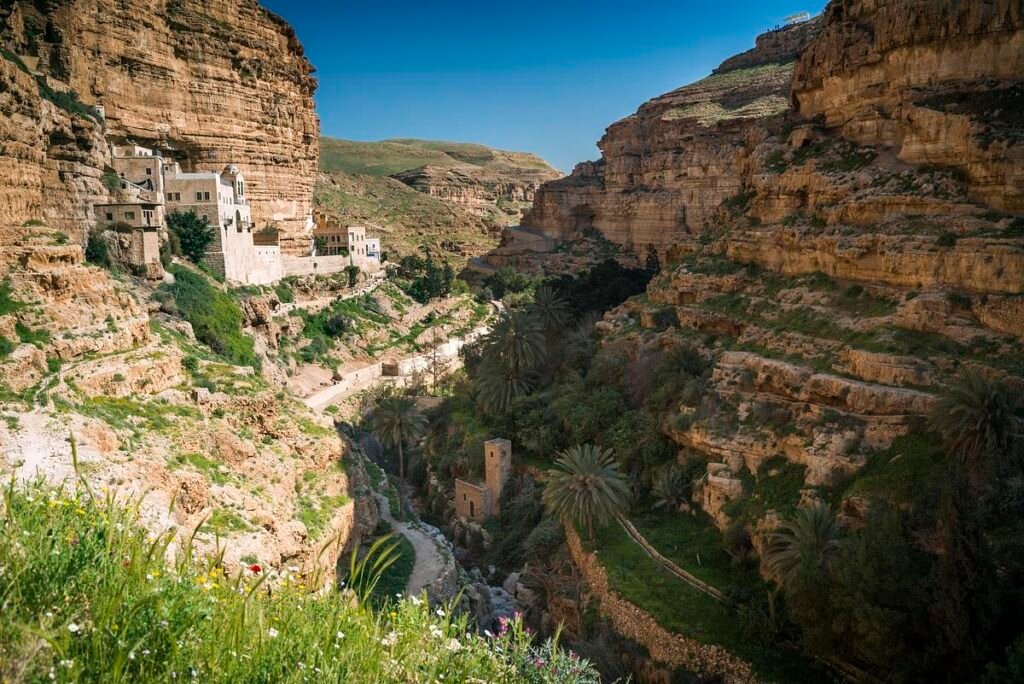
Wadi Qelt – Desert Canyon of Monasteries
Stretching from Jerusalem to Jericho, Wadi Qelt is one of Palestine’s most dramatic desert gorges. Sheer limestone cliffs rise above a winding valley, where desert springs flow year-round and ancient aqueducts cling to the rock face. For centuries, this canyon has been a refuge for hermits, monks, and pilgrims walking the old road to Jericho.
The most iconic site in the valley is St. George’s Monastery, a 5th-century cliffside sanctuary built into the rock, which continues to inspire awe. Hikers can explore trails along the wadi, passing shepherds, caves, and remnants of Roman and Byzantine engineering. The changing desert light gives Wadi Qelt a mystical atmosphere, making it one of Palestine’s most unforgettable landscapes.
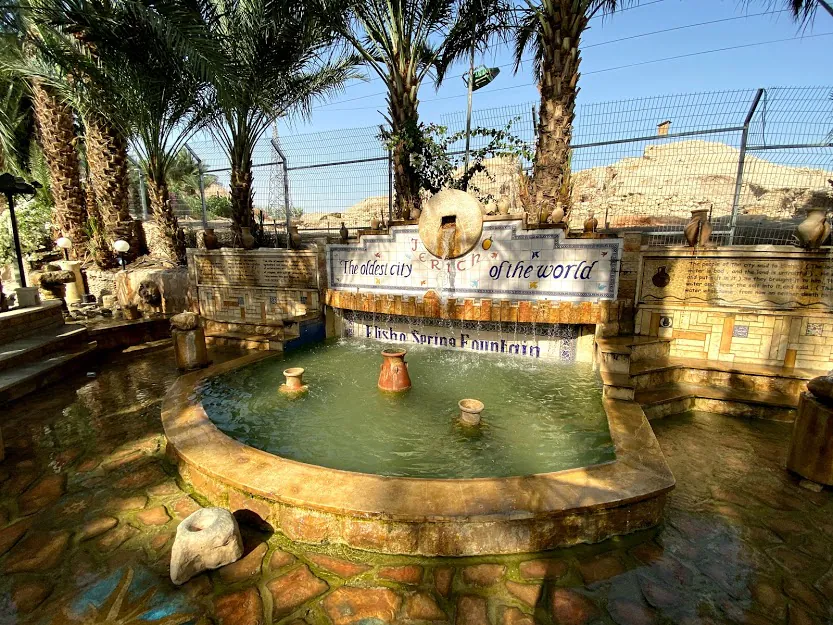
Ein es-Sultan (Eliasha’s Spring)
Known since biblical times as Elisha’s Spring, Ein es-Sultan has sustained Jericho’s people for millennia. Archaeological evidence from Tell es-Sultan shows how this freshwater source made Jericho the world’s oldest continuously inhabited city, providing water for crops, livestock, and human settlement in an otherwise arid environment.
Today, the spring still flows into lush palm groves and citrus orchards, an oasis of greenery against the desert backdrop. Visitors can see the bubbling water emerging from the ground and learn about its role in Jericho’s survival and prosperity. Ein es-Sultan is not only a natural wonder but also a symbol of resilience, representing how life has flourished in Jericho for over 10,000 years.
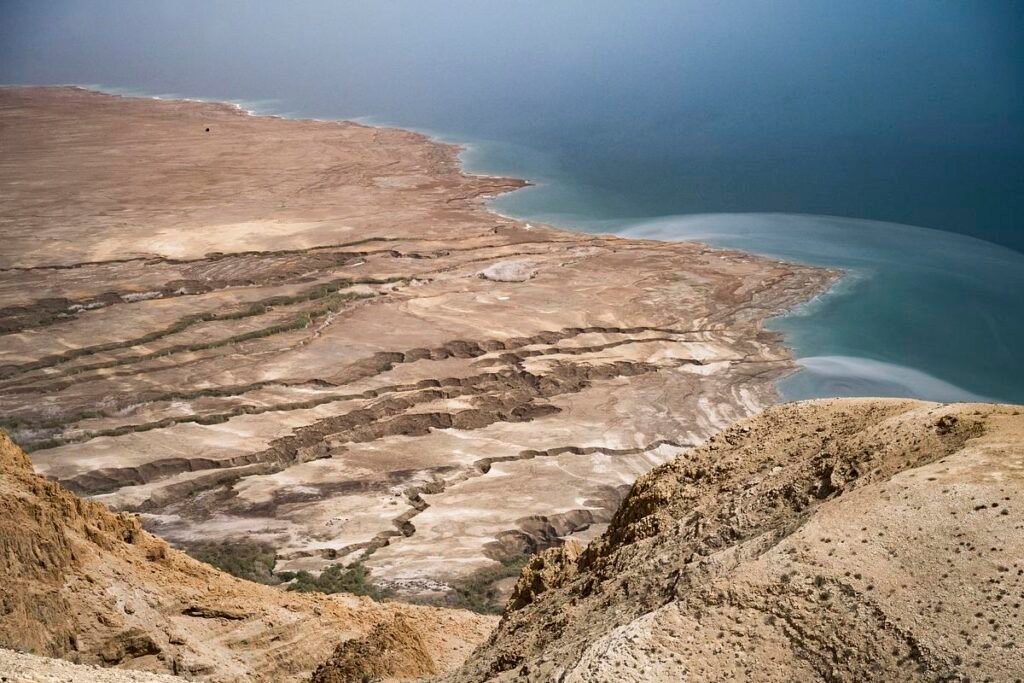
Dead Sea – The Lowest Point on Earth
Located just 15 minutes from Jericho, the Dead Sea is one of the world’s most extraordinary natural wonders. Sitting more than 430 meters below sea level, it is the lowest point on earth’s surface. Its waters contain a salt concentration nearly ten times higher than normal seawater, allowing visitors to float effortlessly on its surface. The surrounding desert cliffs and the Moab Mountains across the valley in Jordan create a breathtaking backdrop.
The Dead Sea has been prized since antiquity for its healing mud and mineral-rich waters, which are said to treat skin conditions and improve well-being. In ancient times, its resources were used for perfumes, medicines, and trade. Today, visitors come to relax, float, and experience one of the most unique environments in the world. A visit to Jericho is incomplete without dipping into its surreal waters.

Jordan Valley Panoramas
The Jordan Valley, stretching east of Jericho, is one of the most fertile yet dramatic landscapes in Palestine. From rolling farmland to desert cliffs and the winding Jordan River, the valley showcases the full range of natural contrasts. Villages cultivate dates, bananas, and citrus, while desert plateaus offer sweeping views of the valley floor and the mountains of Jordan across the river.
Travelers can enjoy scenic drives or cycling routes that pass through farms, Bedouin communities, and desert landscapes. Sunrise and sunset in the Jordan Valley are particularly striking, with golden light reflecting off fields and riverbeds. For those who want to experience the combination of agriculture, wilderness, and sacred geography, the Jordan Valley offers a perfect complement to Jericho’s historic sites.
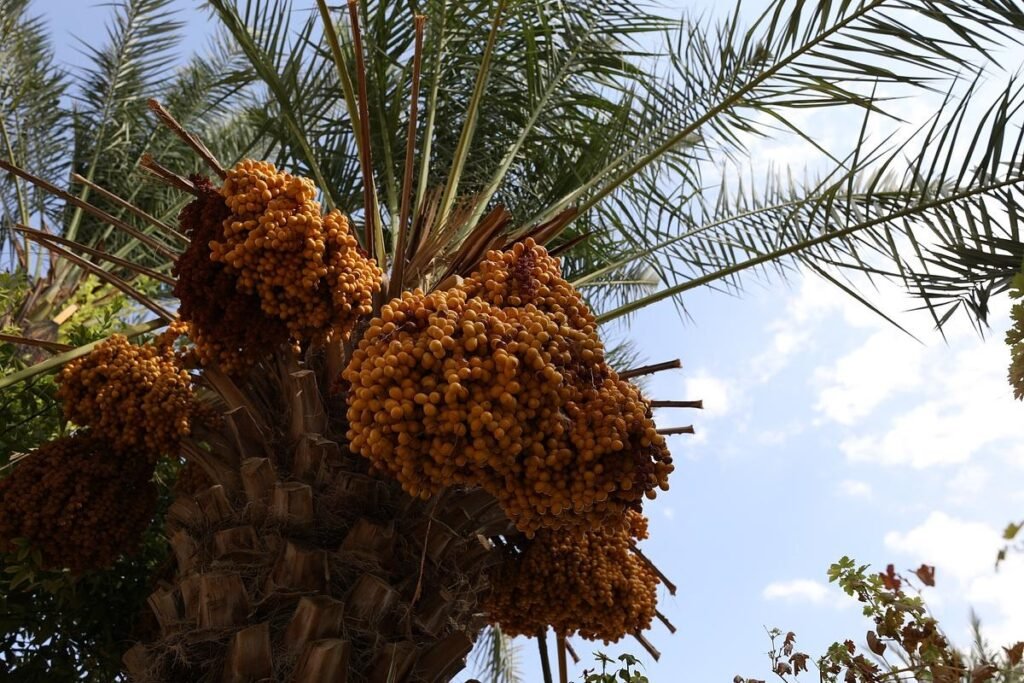
Jericho’s Palm Groves and Agriculture
Jericho has long been called the “City of Palms”, and for good reason. Its fertile soils and steady supply of water from springs and aquifers make it an agricultural paradise in the desert. Vast groves of date palms dominate the landscape, alongside fields of citrus, bananas, and seasonal vegetables. For centuries, this abundance has made Jericho both a local breadbasket and a trade hub for surrounding regions.
Walking or driving through Jericho’s groves is a chance to see Palestinian farmers at work, tending crops and harvesting dates using traditional methods. Local markets sell the produce, especially Jericho’s famed Medjool dates, prized internationally for their size and sweetness. Agriculture here is more than livelihood — it is a cultural identity, linking Jericho’s people to the land across generations.
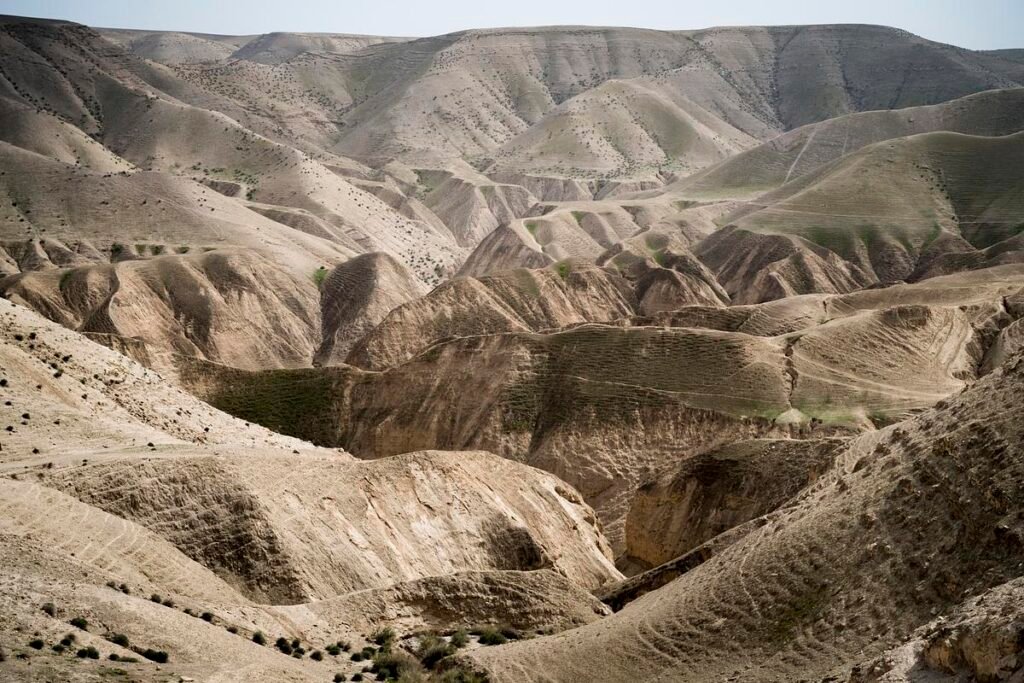
Judean Desert – Wilderness of Prophets and Pilgrims
Stretching west and south of Jericho, the Judean Desert is a stark yet breathtaking landscape of rolling hills, dry riverbeds, and dramatic cliffs. Its silence and vast horizons have drawn prophets, hermits, and pilgrims for centuries. This is the wilderness where Jesus is believed to have fasted for 40 days, and where countless monasteries and hermit caves still cling to the rocky slopes.
For visitors, the Judean Desert offers both spiritual reflection and adventure. Travelers can hike or ride along ancient trails, explore hidden monasteries such as Mar Saba and St. George, or simply stand in awe of the endless views. Sunrise and sunset here paint the desert in golden light, offering some of the most unforgettable panoramas in Palestine.

Bird Migration in the Jordan Valley
The Jordan Valley is one of the world’s great migratory corridors for birds, making Jericho a remarkable destination for nature lovers. Twice a year, in spring and autumn, millions of birds travel this route between Europe, Asia, and Africa. Storks, eagles, buzzards, cranes, and countless smaller species can be seen soaring over the valley or resting in the fields and wetlands.
For visitors, birdwatching here offers a chance to connect with a vibrant and often overlooked part of Jericho’s natural heritage. Local guides and eco-tours highlight the best times and places to witness the migration, while the backdrop of desert cliffs and farmland adds to the spectacle. Bird migration in Jericho underscores the city’s role as a crossroads — not only for people and faith, but also for nature itself.
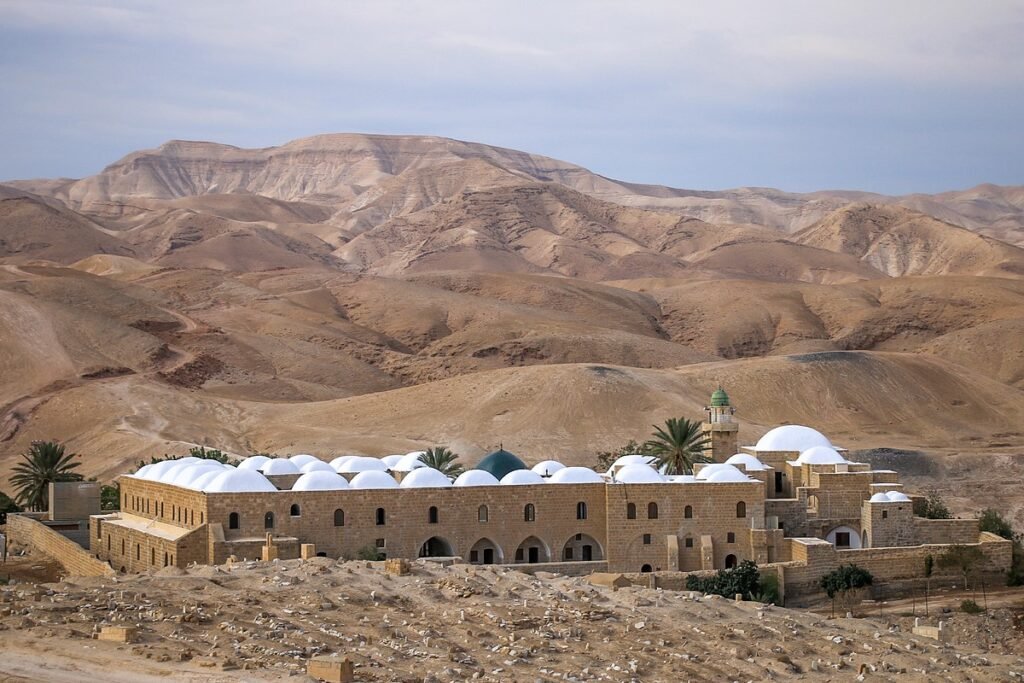
Mount Nabi Musa Ridge – Desert Panoramas
Rising south of Jericho, the ridge near Nabi Musa offers some of the most breathtaking views of the Judean Desert and Jordan Valley. From its slopes, visitors can see the shimmering waters of the Dead Sea to the east, the rugged cliffs of Wadi Qelt to the west, and the rolling desert stretching endlessly toward Jerusalem.
This landscape has long been tied to spirituality and pilgrimage, with Nabi Musa shrine marking the Islamic tradition of the Prophet Moses’s resting place. Today, it is also a natural vantage point, perfect for hiking, photography, and sunset watching. The desert light transforms the scene throughout the day, making it an unforgettable stop for travelers seeking both natural beauty and cultural meaning.
Search Sites and Attractions in Palestine
Search by type of attraction and location
