Overview
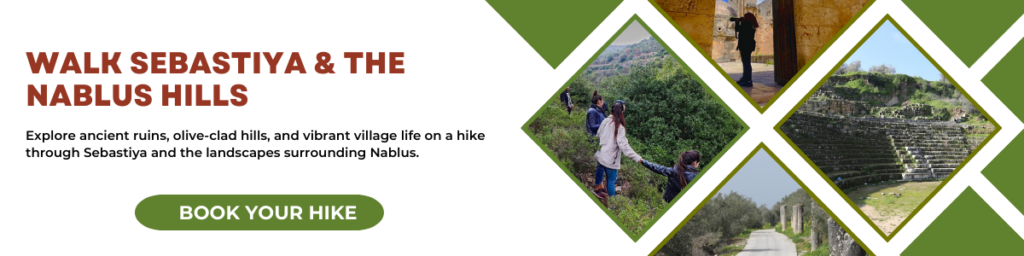
The hills surrounding Nablus are a place where history and nature intertwine. At their heart lies Sebastiya, a village built upon the ruins of ancient Samaria, one of the region’s great biblical cities. Walking here means discovering Roman columns, Byzantine mosaics, Crusader remains, and Ottoman architecture — all layered together in one unforgettable landscape.
At the same time, the Nablus hills offer pastoral beauty. Olive groves, wild herbs, and terraced valleys shape the scenery, while local farmers and shepherds maintain age-old traditions. A walk through this area is both a journey into deep history and a living cultural encounter.
Trail Experience
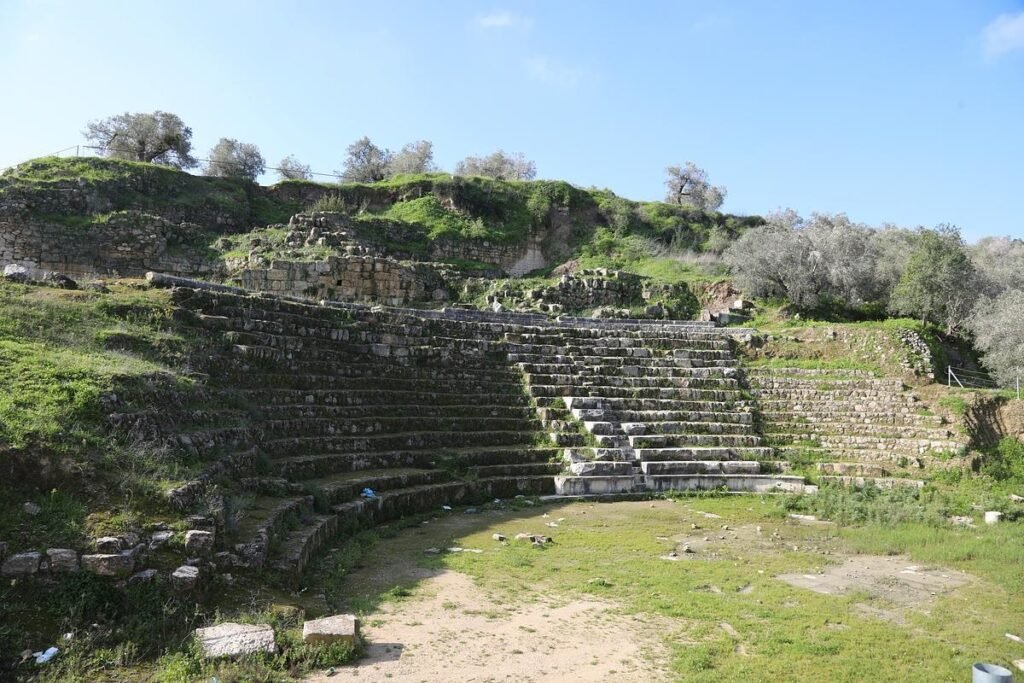
The walking routes around Sebastiya lead visitors past monumental ruins and through quiet village streets. Along the way, hikers can explore the ancient forum, amphitheater, and Crusader cathedral, before pausing for tea in the village square. The surrounding hills invite longer hikes, with trails offering sweeping views of northern Palestine.
Nablus itself is only a short drive away, making it easy to combine archaeological exploration with a visit to the city’s vibrant old souq and famous knafeh. In spring and autumn, the hills are green and fragrant, making the journey especially rewarding.

Cultural & Natural Significance
Ancient Samaria: Capital of the northern Kingdom of Israel, with ruins spanning thousands of years.
Roman & Byzantine Legacy: Amphitheater, temples, mosaics, and public spaces still visible today.
Crusader & Ottoman Layers: The cathedral, citadel, and village houses reflect later eras.
Living Heritage: Modern Sebastiya village blends archaeological wonders with contemporary Palestinian life.
Practical Information
Starting Point: Sebastiya village, 10 km northwest of Nablus.
Length: 4–8 km, depending on chosen trail routes.
Difficulty: Easy to moderate, suitable for most visitors.
Best Seasons: Spring (March–May) and autumn (September–November).
Tips: Guided tours enrich the visit with local stories. Wear sturdy shoes for uneven terrain and allow time to explore the village square and nearby cafés.