Overview
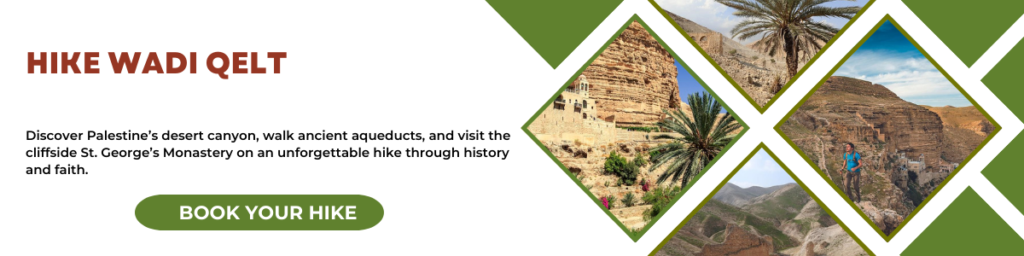
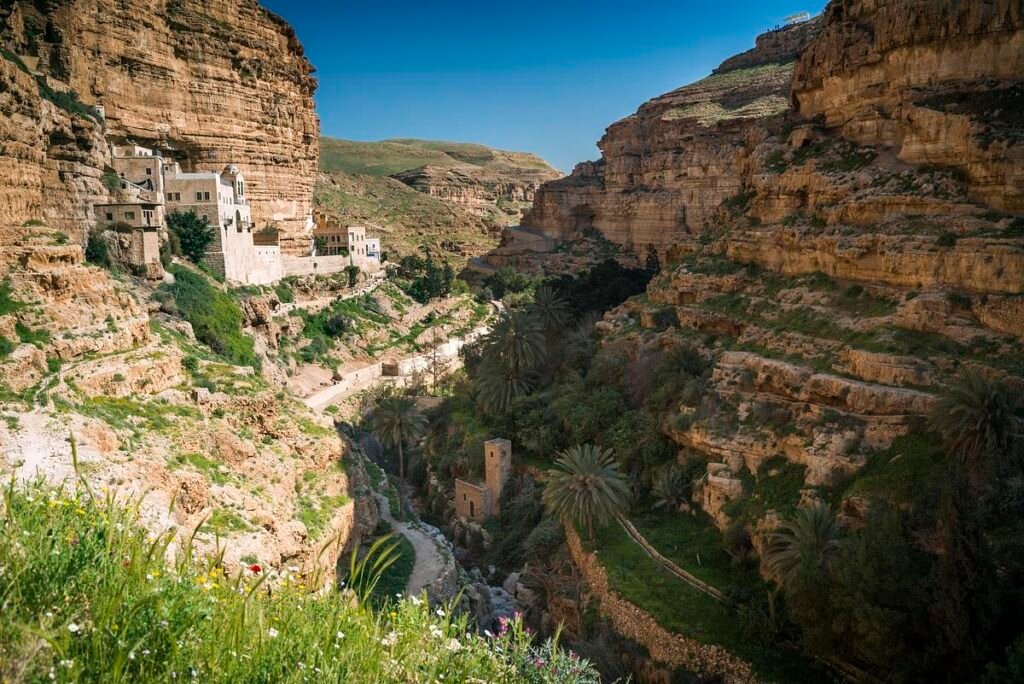
Wadi Qelt is one of Palestine’s most dramatic landscapes — a desert canyon carved by time and flowing water. Stretching from Jerusalem to Jericho, it is a place where nature, faith, and history converge. At its heart lies St. George’s Monastery, clinging to the cliffs in a breathtaking display of devotion.
At the same time, Wadi Qelt is more than a scenic gorge. It is a living landscape where shepherds graze their flocks, ancient aqueducts still carry water, and pilgrims trace paths that have been walked for centuries.
Trail Experience
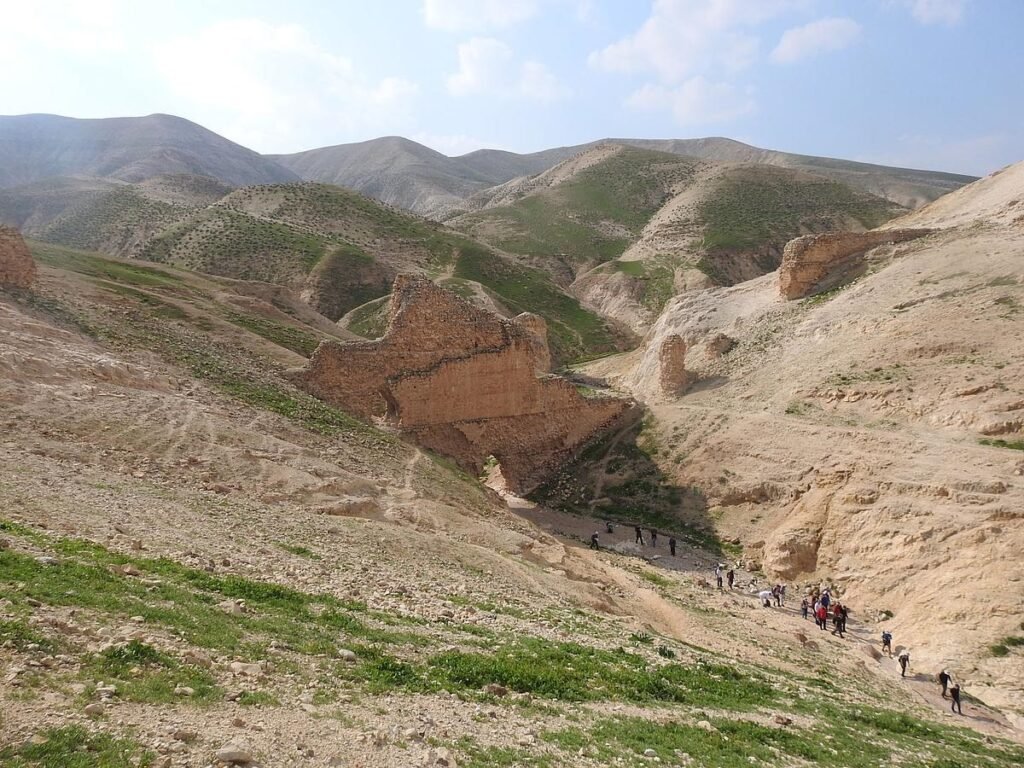
The hike through Wadi Qelt offers sweeping desert views, rugged cliffs, and encounters with local life. As you descend into the canyon, the silence of the desert is broken only by the sound of water flowing through the stream. Along the way, hikers may meet Bedouin shepherds or see remains of ancient aqueducts built by the Romans.
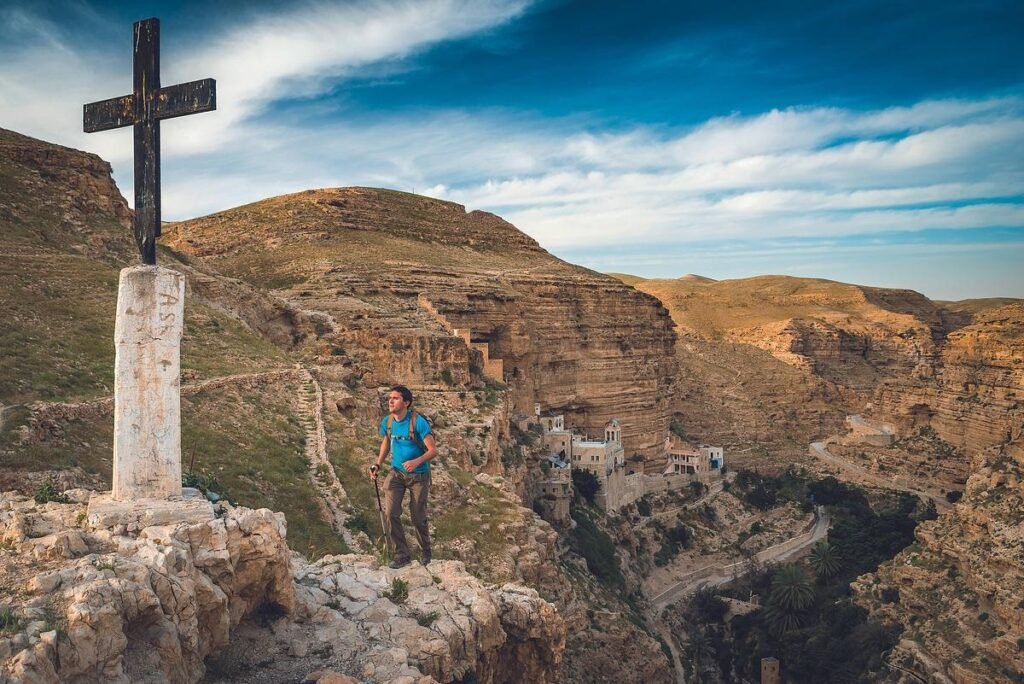
The trail is moderate to challenging, with steep sections and rocky terrain. In spring, wildflowers dot the hillsides, while autumn offers cooler air and golden desert light. For many, the highlight is reaching St. George’s Monastery, a 5th-century Greek Orthodox monastery built into the cliffs, still active and welcoming pilgrims today.
Cultural & Natural Significance
Historic Monastery: St. George’s Monastery, one of the most iconic in the Holy Land, is a site of pilgrimage and solitude.
Biblical Connections: The wadi is associated with the “Valley of the Shadow of Death” from Psalm 23.
Living Traditions: Shepherds, Bedouin communities, and monks all inhabit this landscape.
Natural Beauty: The canyon’s stark desert cliffs contrast with the life-giving stream at its base.
Practical Information
Starting Point: Near Jericho; accessible by car or taxi from Jerusalem or Bethlehem.
Length: 6–8 km depending on the route.
Difficulty: Moderate to challenging, with steep climbs.
Best Seasons: Spring (March–May) and autumn (September–November).
Tips: Bring plenty of water, sun protection, and sturdy shoes. Modest dress is required to enter the monastery. Guided hikes are recommended for cultural context and navigation.